
June 10, 2026
AI Vendor Lock-In: How to Keep Control of Your System
A Chennai fintech lost everything when their AI vendor shut off access overnight. Don't let vendor lock-in destroy your business—here's how to escape the trap.
The phone call came at 2 AM.
"Sir, our entire customer support system is down. The AI vendor says our contract expired and they've shut off API access. We have 10,000 customers waiting and no way to help them."
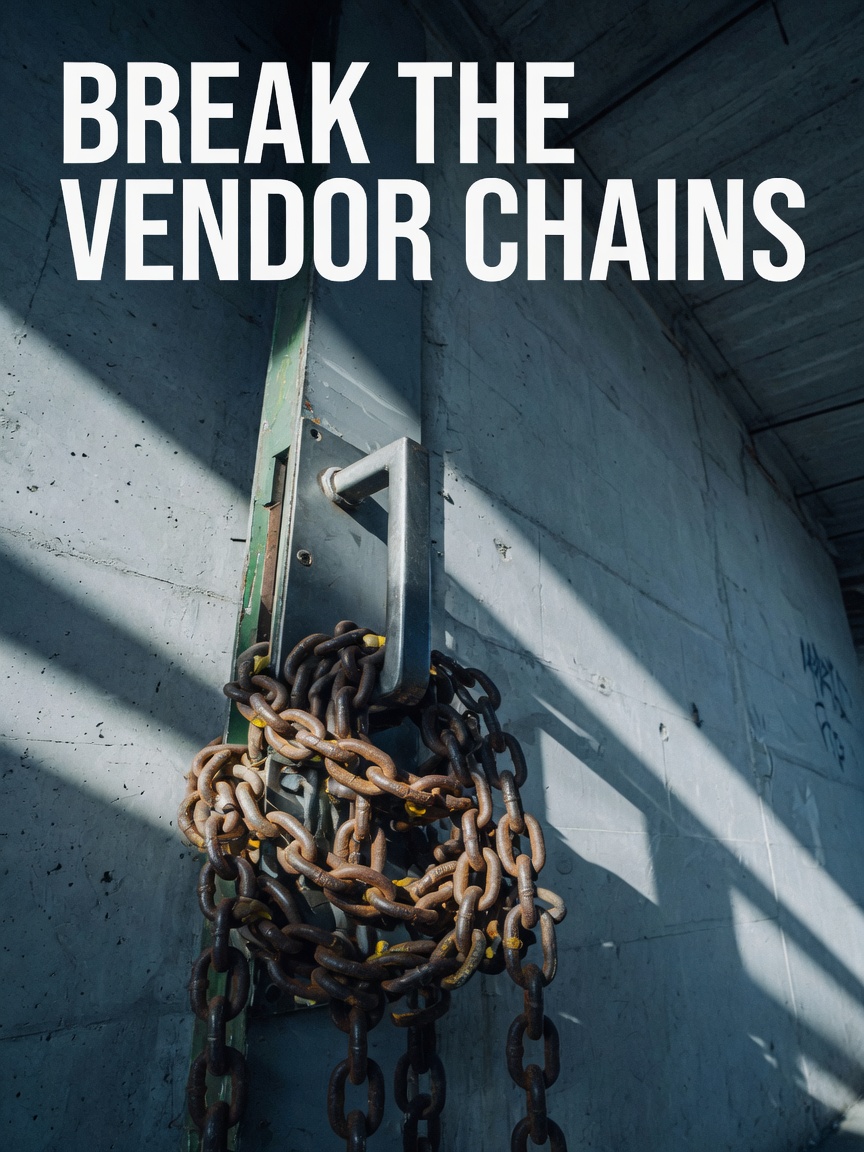
That's how Rajesh, CTO of a Chennai-based fintech startup, learned the brutal reality of AI vendor lock-in. His company had built their entire customer service around one vendor's proprietary AI system. When contract negotiations went south, they found themselves completely helpless—trapped in a digital prison with no escape route.
After witnessing hundreds of AI implementations over the past five years, I can tell you this: vendor lock-in isn't just an inconvenience—it's a business-killing trap that's destroyed companies overnight.
The 5 Vendor Lock-in Traps That Will Destroy Your Business
1. The Proprietary Data Format Prison
What went wrong: A Mumbai logistics company spent 18 months feeding customer data into their AI vendor's proprietary system. When they tried to switch vendors, they discovered their data was stored in a completely custom format that couldn't be exported or migrated.
The cost: ₹2.3 crores to manually reconstruct 18 months of training data, plus 8 months of downtime while rebuilding their entire AI system from scratch. Three major clients walked away during the transition.
How to avoid it: Demand data portability clauses in every AI vendor contract. Insist on standard formats (JSON, CSV, Parquet) for all data exports. Test data export functionality before signing—don't just take their word for it.
Warning sign: If your vendor can't show you exactly how to export your data in the first sales meeting, run.
2. The API Dependency Death Spiral
What went wrong: An e-commerce platform built their entire recommendation engine around a single vendor's APIs. The vendor was acquired by a competitor who immediately tripled pricing and changed the API structure with 30 days notice.
The cost: Emergency development costs of $180,000 to rebuild the recommendation system. Revenue dropped 23% during the 4-month transition as product recommendations failed. Customer satisfaction scores plummeted from 4.2 to 2.8 stars.
How to avoid it: Build abstraction layers around all external AI APIs. Never call vendor APIs directly from your application code. Create wrapper functions that can swap between different AI providers. Always have a backup vendor tested and ready.
Reality check: If changing AI vendors would require rewriting more than 20% of your codebase, you're already trapped.
3. The Custom Model Hostage Situation
What went wrong: A healthcare startup paid their AI vendor $400,000 to develop a "custom" medical diagnosis model. When the relationship soured, they discovered the vendor owned all intellectual property rights to the model—including the weights trained on the company's own patient data.
The cost: Complete loss of $400,000 investment plus 14 months of development time. Had to start from zero with a new vendor while competitors gained market advantage. Two key engineers quit in frustration.
How to avoid it: Never, ever agree to IP ownership clauses that give vendors rights to models trained on your data. Demand source code escrow for any custom development. Insist on clear model ownership documentation before any development begins.
Legal landmine: Many AI vendors bury IP ownership clauses in page 47 of their contracts. Read every word or hire a tech lawyer who understands AI licensing.
4. The Infrastructure Dependency Nightmare
What went wrong: A retail chain deployed AI-powered inventory management that required the vendor's specialized hardware infrastructure. When they wanted to scale to new regions, they discovered the vendor only supported AWS, but their entire infrastructure was on Azure.
The cost: $300,000 in cloud migration costs, plus 6 months delay in international expansion. Had to maintain duplicate infrastructure for 8 months during transition. Lost first-mover advantage in three key markets.
How to avoid it: Demand cloud-agnostic solutions that run on your existing infrastructure. Test deployment on multiple cloud platforms before committing. Avoid vendors who require proprietary hardware or specialized infrastructure components.
Red flag: Any vendor who says their AI "only works" on specific cloud platforms is either lying or using outdated technology.
5. The Support Ransom Trap
What went wrong: A financial services company discovered their AI fraud detection system had a critical bug affecting 15% of transactions. The vendor demanded a $50,000 "premium support" upgrade to provide a fix, claiming standard support didn't cover "advanced troubleshooting."
The cost: $50,000 ransom payment plus $200,000 in fraudulent transactions that slipped through during the 3-week delay. Regulatory fine of $75,000 for inadequate fraud controls. Customer trust severely damaged.
How to avoid it: Define "critical bug" clearly in your contract with guaranteed response times. Negotiate support level agreements that cover production issues without additional fees. Build internal AI expertise so you're not completely dependent on vendor support.
Power move: Maintain relationships with 2-3 AI consultants who understand your vendor's technology and can provide independent support.
Our Approach: Vendor Independence by Design
At Renga Technologies, we've seen too many businesses destroyed by vendor lock-in. That's why every AI implementation we design follows our "Vendor Independence Protocol":
- Multi-vendor architecture: We build systems that can switch between AI providers with minimal code changes
- Data sovereignty audits: We verify you can export 100% of your data before any integration goes live
- Contract red-team reviews: Our legal experts identify and eliminate lock-in clauses before you sign
- Escape route planning: Every project includes a documented plan for migrating away from each vendor
- Internal capability building: We transfer knowledge so you're never completely dependent on external vendors
Don't let an AI vendor hold your business hostage. The decisions you make today about vendor relationships will determine whether you own your AI future—or whether it owns you.
Schedule a vendor independence audit before you sign that next AI contract. Your future self will thank you when you're not trapped in someone else's digital prison.
Have a workflow like this?
Tell us which job you want off your team's plate. You'll get the build, a fixed price and a launch date within 48 hours.